Buy it right, prep it once, keep it running, and keep all ten fingers. Every guide is written in plain language for real driveways.
Maintenance
A new snowblower engine has a short break-in schedule, not a ritual. Briggs and Stratton and Toro publish different first oil change hours, plus the load rule, the fastener check, and the cable inspections that come with it.
Safety
The gas can in the garage is part of the snowblower kit. Approved containers, the 95 percent fill ceiling, ground contact while filling, a dated rotation, and the municipal hazardous waste route for fuel that ages out.
Technique
Three metres is the opening Toronto aims to cut in your windrow. The rest of the bank is a layered job: check the city first, clear before it refreezes, and set the pocket that shrinks the next one.
Maintenance
Paddles are done when the rubber reaches the wear indicator holes, not when the calendar says so. The 10 hour check, the metal contact line, two fastener systems, and the scraper done in the same session.
Maintenance
A rubber paddle impeller kit only helps a two stage snowblower with the right gap. The 1/4 to 5/8 inch eligibility window, the causes to rule out first, the warranty cost, and the documented install procedure.
Buying
Peerless snowblower chains list at US$59.99 to US$74.99 by size, checked November 2, 2026. Chains vs an aggressive tread tire swap compared on price, surface damage, fit traps, and the documented install procedure.
Storage
The machine can stay in the cold garage; the battery should not. In-season and long storage routines kept separate, EGO and Snow Joe temperature and charge figures labelled, and the brand conflict on storage charge resolved.
Troubleshooting
Diagnose a snowblower that won't start by symptom, not by parts-swapping: audit the cold-start sequence, read the spark plug wet or dry, test spark, then work the fuel system, with clear stop rules for the shop.
Costs
Owning a snowblower vs hiring a seasonal snow service in Canada, run through one ledger: sourced seasonal contract ranges by city, annualised ownership costs, break-even math, and the contract fine print.
Buying · Featured
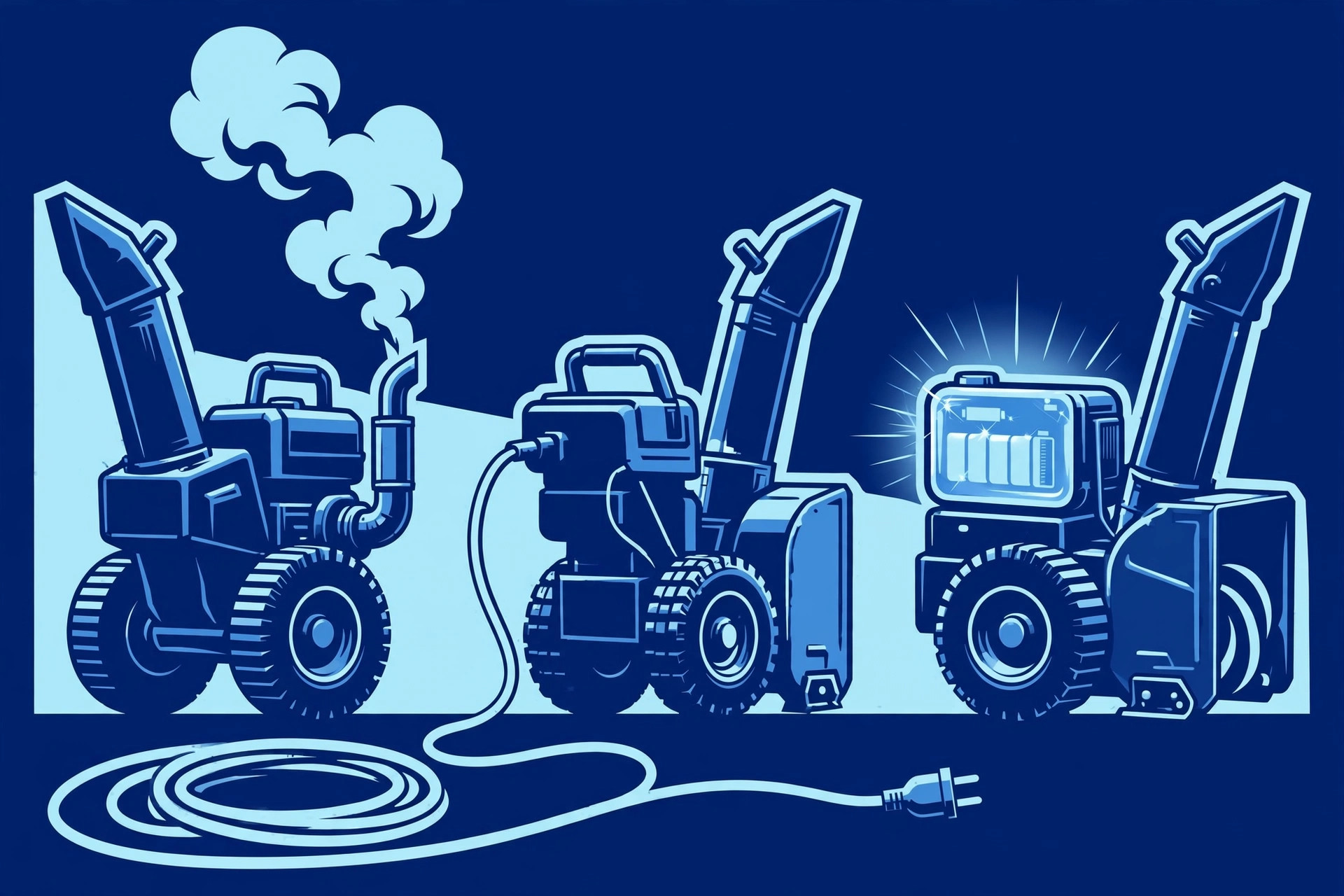
The single biggest decision comes before you ever look at a width or a stage. Match the power source to your driveway size, your snowfall, and how much maintenance you actually want to do.
Read the guide →

Buying
Clearing width, single vs. two-stage, throw distance, tires vs. tracks, what each spec actually means for your driveway, without the marketing fog.
Read the guide →
Prep
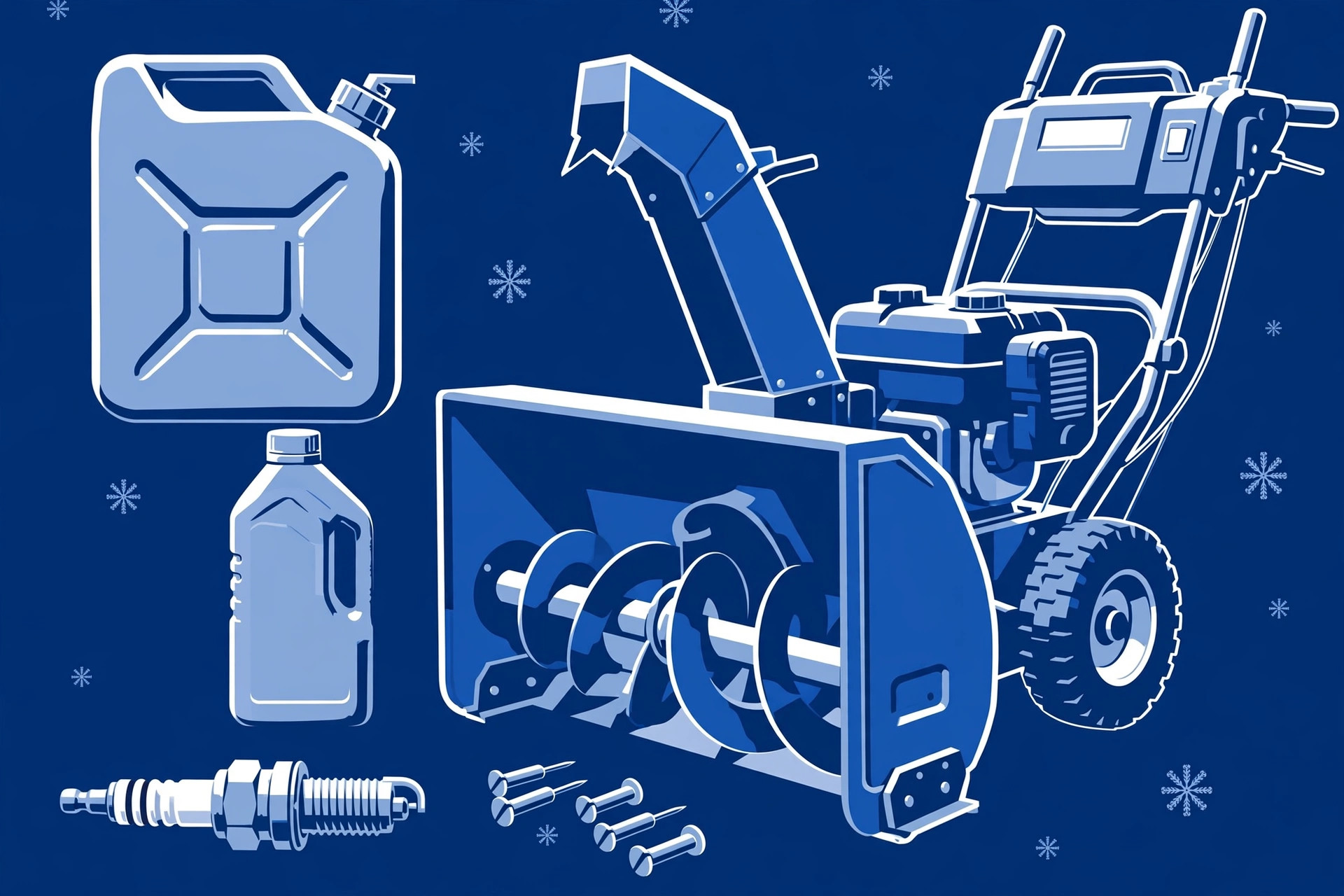
The 30-minute pre-season routine that prevents the two most common November discoveries: it won't start, and a pin sheared last spring.
Read the checklist →
Maintenance
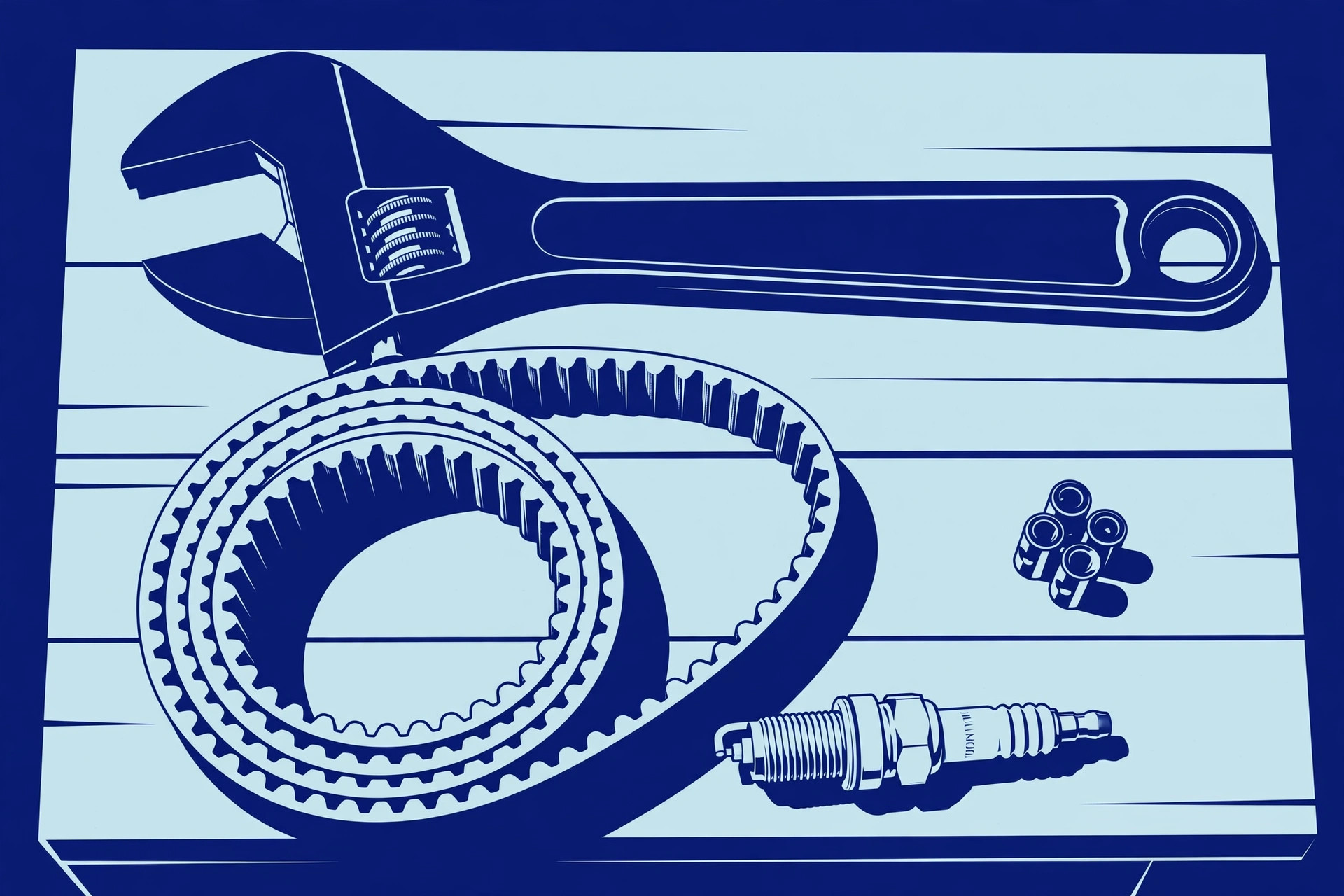
Machines fail in February because of something ignored in November. The after-every-use habits and mid-season checks that keep it throwing.
Read the guide →

Safety
The rules that matter: hands never in the chute, engine off before clearing clogs, carbon monoxide, and where to point the discharge. Read this one twice.
Read the guide →
Buying
Spring is cheaper, but October is the last month where full selection, fall promotions, and an unhurried service shop all overlap. A buy-new, buy-used, or wait decision framework.
Read the guide →
Maintenance
What a proper pre-season tune-up should include, the questions to ask before you hand the machine over, and what to verify at pickup, plus DIY-vs-shop math.
Read the guide →
Power Types
Sticker prices lie. Five-year ownership math across three driveway scenarios, with the spare-battery cost folded in and every figure sourced.
Read the guide →
Maintenance
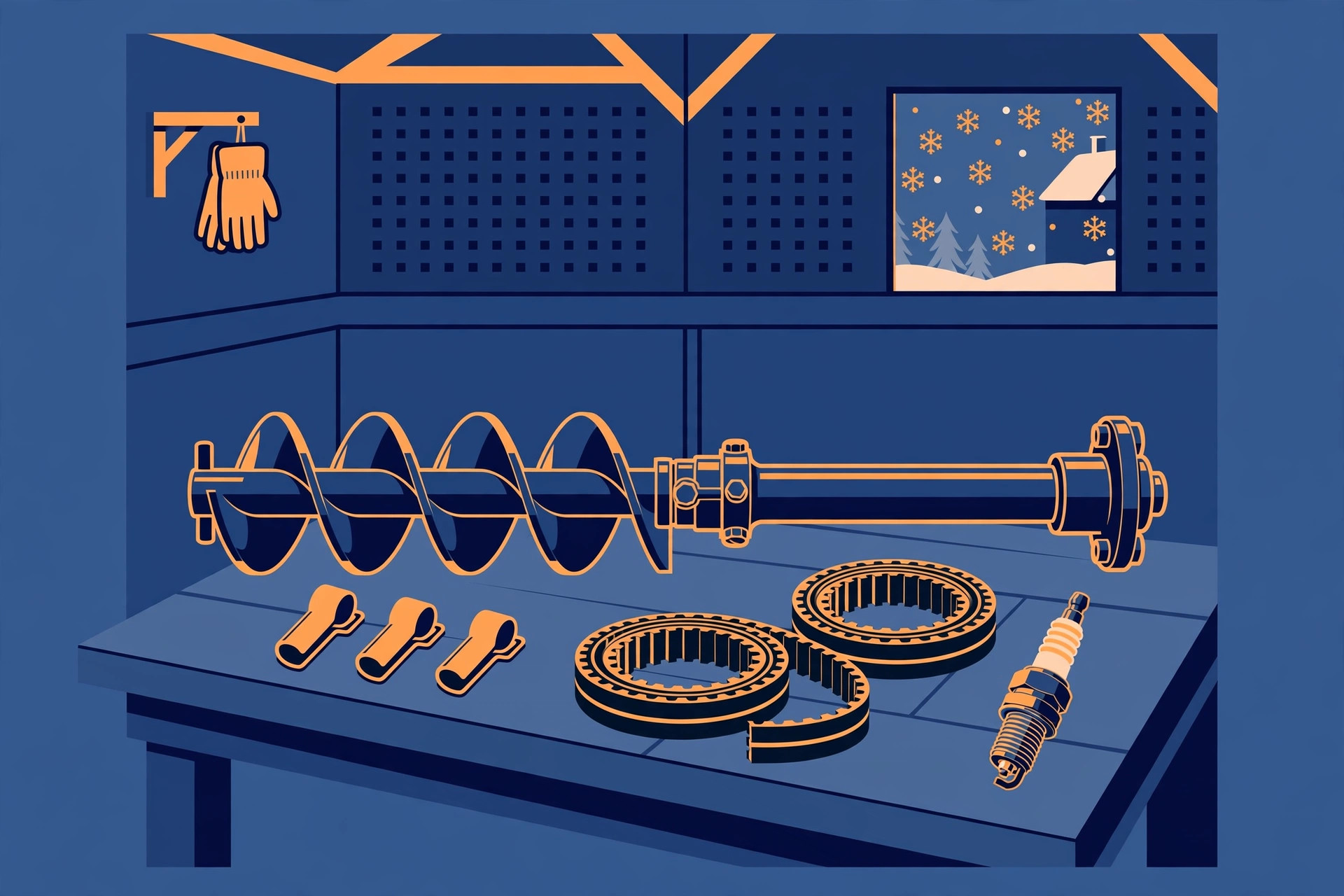
The small parts that strand a machine mid-storm, ranked by stranding risk, plus fitment-first part-number discipline and a safe pin-swap procedure.
Read the guide →
Technique
Go early, treat the chute, take half-width passes at a steady pace, and clear the clogs that still happen the one safe way.
Read the guide →

Storage
Run dry or stabilize, change the oil, wash the salt off, and cover it dry, the April procedure that decides November's first start.
Read the guide →
Technique
The right machine type, a skid-shoe setting from your own manual, the spacer setup procedure, and the protective snow layer you leave on purpose.
Read the guide →
Buying
Manufacturer specs side by side, driveway pass math, and directional control, the 12-inch shovel and the 21-inch blower do different jobs.
Read the guide →
Buying
Inspect in person, test-start always: auger, belts, fuel system, oil, and the repair-cost table that prices every finding.
Care
The E10 problem explained, five manufacturer principles, and a fuel strategy matched to how often your machine actually runs.
Maintenance
Prove it is the belt first, the safety setup, both swap procedures step by step, and the five-second auger-stop verification the manuals demand.
Maintenance
What the two wear parts do, the adjust-reverse-replace inspection, the spacer method, and manufacturer clearance figures reconciled by surface.
Technique
The popular across-the-slope method contradicts CCOHS guidance: the authority limits first, the single-stage exclusion, and the three-gate framework for grades that stay within limits.
Maintenance
Warm drain, plug wire off, refill to your own engine's capacity, 18 to 20 oz on the Briggs Snow Series manual, not a universal figure, plus the interval and hazardous-waste disposal.
Maintenance
0.032 in for the Toro CCR, 0.030 in for Briggs: the gap is engine-specific, the torque figures agree once the units are converted, and hand-threading protects the aluminium head.
Troubleshooting
A chute that won't rotate and a chute that won't hold its angle are two different failures: split the symptom first, cable, ice, gear, or worn pinion, then follow the fix path and the 25-hour gear lubrication rule.
Storage
The fuel rule decides where the machine may live before the tape measure comes out, then the footprint math: folded handles, a 36-inch door check, and 20 to 30 percent clearance.
Maintenance
Slips under load, slips in every speed, or slips when wet, three patterns, three causes. The manual's order comes first: cable adjustment before replacement, rubber inspected on the 50-hour check.
 Snowblower Buying & Care