 Snowblower Buying & Care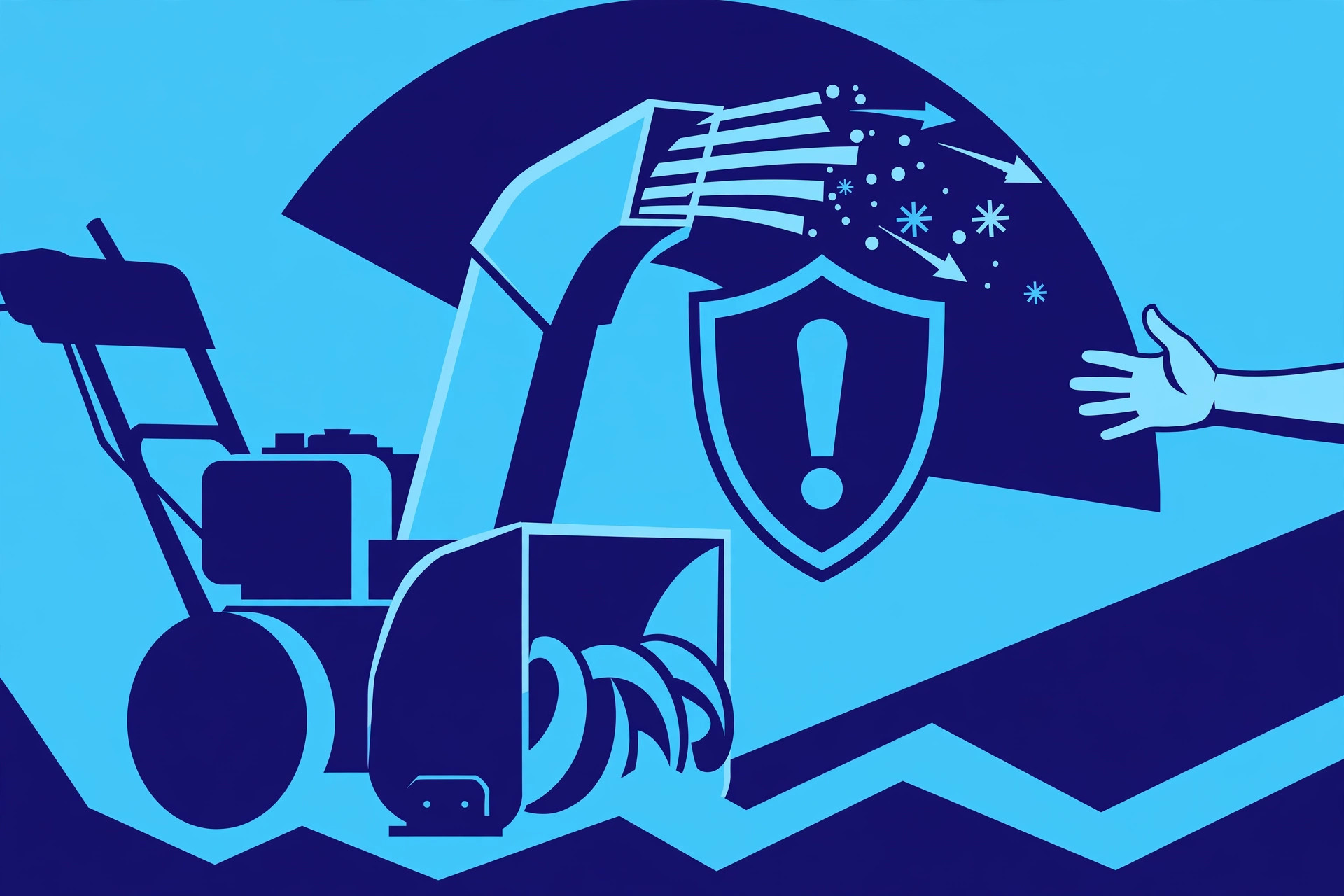
Never put your hands — or any body part — inside the chute or near the auger, even if the machine looks stopped. This guide is general safety information, not a substitute for your machine's operator manual. Always follow the manufacturer's warnings for your specific model.
A snowblower is one of the most dangerous machines a homeowner operates — a fast-spinning auger and impeller with the power to throw heavy snow dozens of feet. Most serious snowblower injuries share the same story: someone reached into a clogged chute or auger housing. Every rule below exists because someone learned it the hard way.
The chute rule: hands never go in
Wet snow clogs chutes. It will happen to you. When it does, the procedure is non-negotiable:
- Shut the engine off. Not idle — off. On a battery machine, remove the battery or engage the lock-out per your manual.
- Wait for all moving parts to stop completely. The auger and impeller can keep spinning for several seconds after shutdown, and tension in a clog can release suddenly.
- Disconnect the spark plug wire (gas machines) so the engine cannot accidentally restart while you work.
- Clear the clog with the clean-out tool that came with the machine — a stick or broom handle works if the tool is missing. Never your hands, never your feet.
The reason this matters so much: a clogged auger can be under spring-like tension, and a hand in the chute when it releases is how amputations happen. The clean-out tool exists for exactly this job. If you lost it, replace it before the next storm — it costs almost nothing and it's the most important accessory you own.
Keep hands and feet clear, always
Never reach into the auger housing for any reason while the machine could run. Keep feet away from the front of the machine — never lift or tip a running blower to reach underneath. If the auger strikes something and jams, shut down fully using the procedure above before investigating. And never remove or bypass safety shields, guards, or the operator-presence controls: they feel like annoyances right up until the moment they save a finger.
Point the discharge somewhere safe
The chute throws snow, ice chunks, and whatever the auger picked up — gravel, sticks, hidden debris — at high speed. Never point the discharge at people, pets, windows, cars, or the street where traffic passes. Before you start, look around: where are the kids, the dog, the neighbor walking past? Aim the chute downwind when you can, and be ready to redirect it as you turn — the direction you walked last pass isn't necessarily safe this pass.
Carbon monoxide: outside only
Never run a gas snowblower in an enclosed space — not in the garage with the door open, not under a carport with poor airflow. Carbon monoxide is colorless and odorless, and small engines produce it in large amounts. Start the machine outside, warm it up outside, and if you need to bring it back into the garage, shut it off first and push it in.
Fuel safety
Refuel outdoors, with the engine off and cool — never refuel a hot engine, and never smoke anywhere near fueling. Wipe up spills before starting. Store fuel in an approved container, away from the house and any ignition source, and don't stockpile more than you'll use in the season. If you smell strong fuel fumes in an enclosed space, ventilate it before starting anything with a spark.
Dress for the machine, not just the weather
Loose scarves, dangling drawstrings, and untied laces are entanglement hazards around spinning machinery — tuck everything in. Wear eye protection: the discharge throws ice and debris back at surprising angles, especially in wind. Hearing protection matters too; gas machines are loud enough to damage hearing over a season of use. And wear boots with real grip — you're walking on the surface you haven't cleared yet, often in the dark.
Slopes, visibility, and knowing your ground
On slopes, work across the slope rather than straight up and down, and never operate on a slope steep enough that you can't keep solid footing — a slip toward a running auger is the nightmare scenario. Before the season's first snow, mark the edges of your driveway and the location of curbs, valve covers, and landscaping borders with driveway markers or stakes; hidden obstacles are what shear pins are for, but knowing where they are avoids the impact entirely. If you clear before dawn or after dark, wear something reflective and make sure your work area is lit — drivers can't avoid what they can't see.
Kids and pets stay inside the line
Children and pets should be indoors or at a clear, supervised distance while the machine runs — never riding on it, never "helping" near the auger, never playing in the snow you're about to throw. Kids are drawn to the machine; the rule is simple and absolute: the blower runs only when the area in front of it is clear of small people and animals.
Before every use: area clear of people and pets, discharge aimed somewhere safe, all guards and shields in place, nothing loose on your clothing, clean-out tool within reach. Thirty seconds, every time. Make it automatic and you'll never have to make it a decision under pressure.
Safety isn't the exciting part of owning a snowblower, but it's the part everything else depends on. Pair these habits with pre-season prep and mid-winter maintenance, and the machine stays what it should be: a tool that makes winter easier, not a story you tell in the emergency room.